
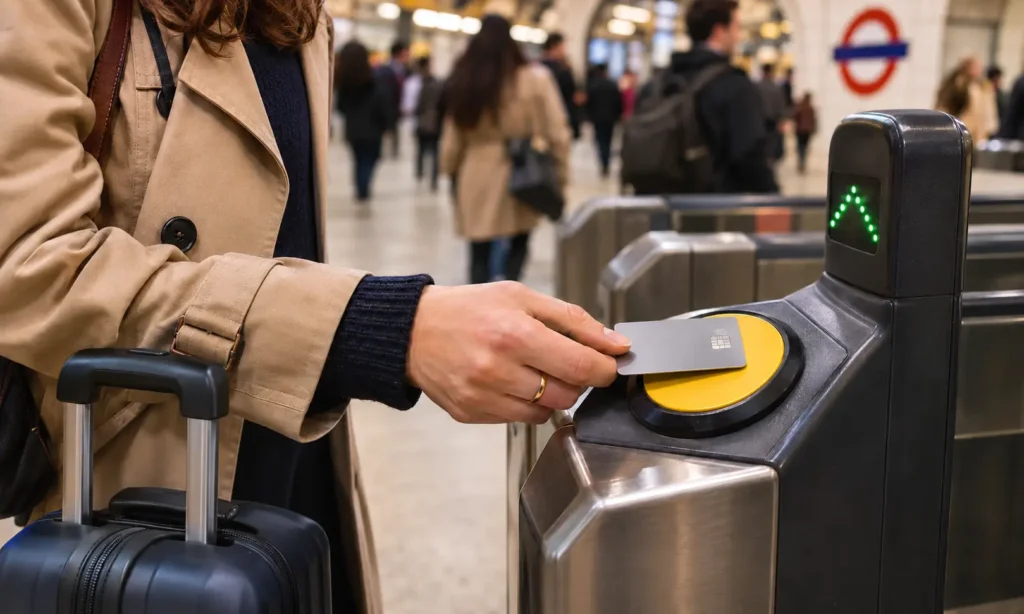
Oyster card vs contactless is a tie on price for most adults. Transport for London (TfL) charges the same pay-as-you-go fares and the same daily and weekly caps, whichever you tap. What changes your cost is the £10.50 Oyster card fee, any overseas charges from your bank, and a few discounts that only work on Oyster.
This guide gives the 2026 figures, three worked trip costs and a clear answer for families. It also covers London’s airports, including Stansted, where the rules changed in March 2026.
Fares and fees last checked: November 2026. TfL fares can change, so confirm prices on the TfL website before you travel.
What Changed for London Fares in 2026
- 1 March 2026: the new Oyster card fee rose by 50p to £10.50, and Tube single fares went up.
- March 2026: Tube and rail daily and weekly caps were frozen, and TfL has said they stay frozen until March 2027.
- 8 March 2026: contactless pay as you go went live on the Stansted Express. Oyster is still not valid there.
- 1 November 2026: bus and tram fares rose after a freeze that ran through the summer.
Quick Answer: Which One Should You Tap?
Use contactless if you are an adult with a bank card or phone wallet that does not charge overseas fees. You pay nothing upfront, there is nothing to top up, and your spending is capped automatically.
Choose an Oyster card if any of these apply:
- You are travelling with children aged 11 to 15 and want the Young Visitor discount.
- You hold a UK railcard that can be added to Oyster, such as the 16-25 or Senior Railcard.
- Your bank charges foreign transaction fees, and you would rather pay them once when you top up.
- You want a fixed travel budget kept apart from your main bank account, or would rather not take your bank card out in crowded stations.
Under-11s need neither, because they ride free on most TfL services alongside an adult who pays.
Oyster Card and Contactless Side by Side
| Feature | Contactless card or phone | Oyster card |
|---|---|---|
| Upfront cost | None | £10.50 non-refundable card fee |
| Adult fares and caps | Same as Oyster | Same as contactless |
| Topping up | Not needed | Needed before you travel |
| Discount for ages 11 to 15 | Not available | Young Visitor discount |
| UK railcard discount | Not available | Some railcards can be added |
| Overseas bank fees | May apply to TfL charges | Paid when you top up |
| Works without phone battery | Bank card yes, phone no | Yes |
| Stansted Express | Accepted | Not valid at Stansted Airport |
| Refunds | Overcharges via a TfL account | Unused credit refundable |
Are Oyster and Contactless Fares the Same in 2026?
Yes. Adult pay-as-you-go fares are identical on an Oyster card, a contactless bank card and a phone or watch. Both also use fare capping. Once your journeys in a day reach the cap for the zones you used, further journeys that day cost nothing extra.
The weekly cap works the same way, but it runs from Monday to Sunday only. It does not start on the day you arrive, which matters for mid-week visits.
| Zones travelled | Daily cap (adult) | Weekly cap, Monday to Sunday (adult) |
|---|---|---|
| Zones 1–2 | £8.90 | £44.70 |
| Zones 1–3 | £10.50 | £52.50 |
| Zones 1–6 | £16.30 | £81.60 |
These are 2026 adult pay-as-you-go caps for the Tube and rail. TfL froze them in March 2026 and has said they will stay frozen until March 2027.
Peak and off-peak single fares
Single fares depend on the zones you pass through and the time you touch in. Peak fares apply Monday to Friday from 06:30 to 09:30 and from 16:00 to 19:00. Every other time, including public holidays, is off-peak.
| Zones travelled | Peak single (adult) | Off-peak single (adult) |
|---|---|---|
| Zone 1 only | £3.10 | £3.00 |
| Zones 1–2 | £3.60 | £3.10 |
| Zones 1–3 | £3.90 | £3.30 |
| Zones 1–6 | £5.90 | £4.00 |
These 2026 Tube fares are the same on Oyster and contactless. For any other route, TfL’s single fare finder gives the exact price.
Bus and tram fares from 1 November 2026
Bus and tram fares were frozen until 1 November 2026 and then rose. London buses do not take cash, so you need contactless or Oyster either way. The Hopper fare still lets you make unlimited bus and tram journeys within one hour for a single fare. Check TfL for the current bus fare and daily bus cap.
Oyster Card Fees in 2026
The £10.50 card fee
A new Oyster card costs £10.50, and you cannot get the fee back. TfL raised it by 50p on 1 March 2026. TfL scrapped the old refundable deposit in September 2022, and the fee has risen since, so older guides quoting £5 or £7 are out of date.
The fee buys the card only. You then add pay-as-you-go credit, or a Travelcard, before your first journey.
Standard Oyster or Visitor Oyster?
Both cards charge the same fares and caps. The difference is how you buy them and what they can hold.
- Standard Oyster: sold at ticket machines in most Tube and rail stations, at Oyster Ticket Stop shops and at TfL Visitor Centres. You can register it and load a 7-day Travelcard onto it.
- Visitor Oyster: ordered online before your trip and posted to you with credit already loaded. You cannot buy one in London, register it online or add a Travelcard. It carries the same £10.50 fee, plus postage.
One coverage gap applies to both. Oyster is not accepted on the Elizabeth line between Reading and Iver, so use contactless on that stretch.
Getting unused credit back
Unused pay-as-you-go credit is refundable, but the card fee is not. A Tube station ticket machine will pay back balances of up to £10, and anything larger goes through TfL. Oyster credit does not expire, so you can also keep the card for your next visit.
Buying and topping up an Oyster card
You can buy or top up a standard Oyster card in several places:
- Ticket machines at Tube, London Overground and most Elizabeth line stations, by card or cash.
- Oyster Ticket Stops, which are local shops showing the Oyster sign.
- TfL Visitor Centres.
- Online or in the TfL Oyster and contactless app, once you register the card. You can also set up auto top-up there.
A Visitor Oyster card is ordered from the TfL Visitor Shop before your trip. Keep enough credit on any Oyster card to cover the full fare, or the gate may not open.
If you lose your Oyster card
Register a standard Oyster card with TfL, and you can move the remaining balance to a replacement if it is lost or stolen. A Visitor Oyster card cannot be registered, so treat the credit on it like cash.
Contactless Costs: Bank Fees and Battery Life
Contactless has no card fee and nothing to top up. TfL charges the same fare an Oyster user pays and takes it from your account.
Overseas transaction fees
The one cost to check is your own bank. Many cards issued outside the UK add a foreign transaction fee to payments in pounds, often quoted at 1% to 3%. Over a week of daily travel, that can add a few pounds to your transport spend. Check your card’s terms before you fly, or bring a card without overseas fees.
Most Visa, Mastercard and American Express contactless cards work at TfL readers. A small number of non-UK cards are not accepted, so carry a back-up card.
TfL adds up each day’s journeys and usually takes one payment, rather than charging every tap. That payment can take a few days to show on your statement, so don’t panic if nothing appears straight away.
Paying with your phone or watch
Apple Pay, Google Pay and other mobile wallets work in the same way, with the same caps. The catch is battery life. If your phone dies between touching in and touching out, you cannot complete the journey and may pay a maximum fare.
Use the same device all day as well. Your phone and the physical card behind it count as two separate payment methods, so switching between them can stop your journeys capping together.
Where You Can Use Oyster and Contactless
Both work on almost all public transport in London:
- Tube, buses and trams
- DLR and London Overground
- Elizabeth line, except Oyster between Reading and Iver
- IFS Cloud Cable Car and Uber Boat by Thames Clippers river buses
- Most National Rail services within Zones 1–9, plus airport links such as Gatwick Express and Heathrow Express
Neither covers black cabs, minicabs or ride-hailing apps. Black cabs take card payments, but taxi fares sit outside pay as you go and never count towards your cap.
Three Cases Where Oyster Saves You Money
Children aged 11 to 15
A bank card has no way of knowing a child is tapping it, so an 11-year-old on contactless pays adult fares. Put the Young Visitor discount on an Oyster card instead, and fares and daily caps drop by 50% for up to 14 days.
How to add the Young Visitor discount
- Get an Oyster card for each child aged 11 to 15.
- Find a member of staff at a Tube station, or visit a TfL Visitor Centre.
- Ask them to add the Young Visitor discount. The child must be with you.
- Travel as normal. The discount lasts 14 days from the day it is added.
Every traveller aged 11 or over needs their own card or device. You cannot pay for two people with one contactless card or one Oyster card.
UK railcard holders
If you hold a 16-25 or Senior Railcard, ask station staff to link it to your Oyster card. Off-peak pay-as-you-go fares then fall by a third. Bring the railcard with you, because staff need to see it. A contactless bank card has no way to hold a railcard. The Two Together Railcard does not discount Oyster pay-as-you-go fares at all.
Cards with high overseas charges
Some banks charge a fixed fee on every overseas transaction. In that case, topping up an Oyster once may cost less than paying by card throughout your trip. Weigh that saving against the £10.50 card fee.
Real Costs: Three Example Trips
These examples use the 2026 Zones 1–2 adult caps. They assume each traveller hits the daily cap every day, so they show the most you would pay. Lighter travel costs less.
Weekend break, one adult
| Cost | Contactless | Oyster |
|---|---|---|
| Travel, Saturday and Sunday | £17.80 | £17.80 |
| Card fee | £0 | £10.50 |
| Maximum total | £17.80 | £28.30 |
Contactless saves the full £10.50 card fee here. For a short adult trip, Oyster only makes sense if your bank charges heavy overseas fees.
Thursday to Wednesday, one adult
The weekly cap only covers Monday to Sunday. A seven-day stay starting on a Thursday therefore splits across two capping weeks.
- Thursday to Sunday: four days at up to £8.90 = £35.60
- Monday to Wednesday: three days at up to £8.90 = £26.70
- Maximum total: £62.30
The same seven days from Monday to Sunday would be capped at £44.70. A 7-day Travelcard for Zones 1–2 costs £44.70 and can start on any day. Loaded onto a new standard Oyster card, the total is £55.20 including the card fee. That saves £7.10 on this trip, as long as you would have hit the cap every day.
Family of four, three days
Two adults travel with children aged 9 and 13.
| Traveller | Contactless | Oyster with Young Visitor discount |
|---|---|---|
| Two adults | £53.40 | Use contactless |
| Child aged 9 | Free | Free |
| Child aged 13 | £26.70 | About £13.35 + £10.50 fee = about £23.85 |
On a three-day trip, the Oyster saving for the 13-year-old is small, at about £2.85. TfL halves the daily cap as well as single fares for Young Visitors, so the saving grows with each extra day of travel, up to the discount’s 14-day limit.
The cheapest mix for most families is simple. Adults tap contactless, children under 11 travel free, and each child aged 11 to 15 gets an Oyster with the discount.
Paper Tickets and Travelcards: Do They Ever Win?
Paper single tickets
A paper single bought from a machine costs £7 for most Tube journeys inside Zones 1–6. That is more than double the £3.10 peak contactless fare for Zone 1. There are no return tickets on the Tube either: a “return” at the machine is simply two singles.
Day Travelcards
A 1-day Travelcard always costs more than the pay-as-you-go daily cap for the same zones. For Zones 1–6, an Anytime Day Travelcard costs £23.60, while the daily cap is £16.30. It only makes sense if you have no contactless card and do not want an Oyster for a single day.
7-day Travelcards
A 7-day Travelcard costs the same as the matching weekly cap, at £44.70 for Zones 1–2. Its advantage is that it can start on any day. It loads onto a standard Oyster card, not a Visitor Oyster or a bank card, and it only covers the zones you buy.
Monthly Travelcards for longer stays
Staying a month or more and travelling most days? A monthly Travelcard for Zones 1–2 costs £171.70 and, like the 7-day version, loads onto a standard Oyster card only. If you will only travel once or twice a week during a long stay, skip it. Contactless will cost far less, and you avoid the £10.50 card fee too.
Using Oyster or Contactless at London’s Airports
All five main London airports now have a rail link that accepts contactless. Oyster is the one to watch: it is not valid at Stansted, and Luton depends on the route. Flying from Gatwick with heavy bags? A Gatwick airport transfer from the Midlands skips the trains entirely.
| Airport | Main rail links to London | Contactless | Oyster |
|---|---|---|---|
| Heathrow | Piccadilly line, Elizabeth line, Heathrow Express | Yes | Yes on the Tube and Elizabeth line |
| Gatwick | Gatwick Express, Southern, Thameslink | Yes | Yes |
| Stansted | Stansted Express | Yes, since 8 March 2026 | No |
| Luton | Trains from Luton Airport Parkway | Yes | Check before you travel |
| London City | DLR | Yes | Yes |
At Heathrow, the Piccadilly line is usually the cheapest option. On the Tube, a journey between Zone 1 and Heathrow is always charged at the peak rate of £5.90. The Elizabeth line charges £15.50 for the same trip, and Heathrow Express costs more again.
Stansted: the old penalty-fare trap
Until March 2026, the Stansted Express did not accept pay as you go. London TravelWatch reported that around 16,000 passengers a year were fined for trying to tap in. Contactless now works on all Stansted Express services. However, Oyster is still not valid at Stansted Airport, and railcard discounts do not apply to contactless fares on this route.
If you are flying from Stansted very early, or with a lot of luggage, a pre-booked car avoids the train changes altogether. NET Airport Transfers runs transfers to Stansted from Birmingham and the Midlands, at a fixed price agreed when you book.
How to Tap In and Out Without Overpaying
- Touch your card, phone or Oyster flat on the yellow reader when you start your journey.
- Touch the same card or device again when you finish, even if the gates are open.
- On buses and trams, touch in once when you board. Do not touch out.
- Look for pink readers when you change between some lines outside Zone 1. Touching one shows you avoided Zone 1, so you pay a lower fare.
- Keep one card or device per person, and keep other cards away from the reader.
Card clash and incomplete journeys
Card clash happens when the reader picks up a different card from your wallet or phone case. If you touch in on one card and out on another, the system records two incomplete journeys. Each can be charged at the maximum fare, so a short hop ends up costing far more than it should. Forgetting to touch out has the same effect, so hold the card you mean to use on its own.
Checking journeys and claiming refunds
Download the TfL Oyster and contactless app, or sign in to a TfL account and add your card. You can then see your journey history, spot incomplete journeys and request a refund. TfL handles contactless refunds on every route that uses pay as you go, including the Stansted Express. The TfL Oyster and contactless helpline is 0343 222 1234.
Receipts for business travel
Need proof of travel for expenses? Register your contactless card in a TfL account, and you can view and download your journey and payment history for up to 12 months. A registered Oyster card also shows its journey history online. Your bank statement alone usually shows only one daily total from TfL, which many expense systems will not accept as a receipt. Companies with regular airport travel can also use a corporate travel account with one monthly invoice.
When Tapping In Isn’t the Easiest Way to Travel
Oyster and contactless sort out the fare. They do not carry your suitcases, run before the first train or get a family of five through the barriers quickly. For those journeys, a pre-booked taxi from NET Airport Transfers takes you door to door at a price agreed when you book.
- Heavy luggage: many Tube stations have stairs, and trains are packed at rush hour. Not every station has step-free access.
- Families and groups: every traveller aged 11 or over needs their own card, so one missing card can hold up the whole group.
- Early and late flights: most Tube lines do not run overnight. The Night Tube runs on selected lines on Friday and Saturday nights only.
- Strike days: planned strikes can close whole lines. Check TfL’s status updates the day before you fly.
Travelling between the Midlands and a London airport
Pay as you go does not cover the train from Birmingham to London. You need a rail ticket for that leg, then a second journey across London to your airport. That usually means changing trains with your luggage at least once. A long-distance taxi from Birmingham replaces both legs with one journey.
For many Midlands travellers, a pre-booked car is simpler. A Birmingham to Heathrow taxi goes door to door at a fixed fare, and on the way home NET tracks your flight and meets you in arrivals with a name board.
Flying from somewhere else? NET also covers Gatwick, Luton, London City and other UK airport transfers, with seven-seat vehicles and child seats available on request for families.
Our Verdict by Type of Traveller
- Adult on a short stay with a fee-free card: contactless.
- Long stay, but only travelling once or twice a week: contactless. The Oyster fee is not worth it.
- Long stay, travelling most days: a monthly Travelcard on a standard Oyster card.
- Adult whose bank charges overseas fees: an Oyster card, or switch to a fee-free card.
- Parent juggling small children and bags in crowds: an Oyster card, so your bank card stays in your pocket.
- Family with children aged 11 to 15: an Oyster with the Young Visitor discount for each older child. Adults can tap contactless.
- UK railcard holder: an Oyster with your railcard linked to it.
- Seven-day stay starting mid-week: a 7-day Travelcard on a standard Oyster card.
- Business traveller claiming expenses: contactless, registered in a TfL account for downloadable journey history.
- Flying from Stansted: contactless or a rail ticket, not Oyster.
Heading to or from a London airport with heavy bags, small children or an early flight? Get a fixed-price quote from NET Airport Transfers and agree your pickup time in advance.
Frequently Asked Questions
Is Oyster cheaper than contactless, and do I need one as a tourist?
For most adults, no on both counts. Fares and caps match, so the £10.50 card fee makes Oyster the dearer choice, and contactless works on the Tube, buses, trams, DLR, London Overground, the Elizabeth line and most National Rail services in London. Oyster comes out ahead for children aged 11 to 15, UK railcard holders and travellers whose bank adds hefty overseas fees.
How much does an Oyster card cost in 2026, and can I get my money back?
A new Oyster card costs £10.50, and that fee stays with TfL. Unused credit is different: it never expires, and you can claim it back at a Tube ticket machine for balances up to £10, or through TfL for more.
Should I buy a Visitor Oyster before I arrive, and is Oyster worth it for a long stay?
Buy one in advance only if you already know you need Oyster, for example for a child aged 11 to 15. A standard Oyster from a station machine has the same £10.50 fee with no postage. On a long stay, Oyster pays off if you travel most days and want a monthly Travelcard; for occasional trips, contactless is cheaper.
Does contactless cap like Oyster, and can I use Apple Pay?
Yes. Daily and Monday-to-Sunday weekly caps work the same way, and Apple Pay, Google Pay and smartwatches charge the same fares. Use one card or device all day: touching in with Oyster and out with contactless, or switching between phone and card, records incomplete journeys and can trigger maximum fares. Keep your phone charged, because you must tap out with it.
Can two people share one card, and what do children pay?
No sharing: every traveller aged 11 or over needs their own card or device. Under-11s travel free with a fare-paying adult. Bank cards cannot carry child discounts, so for half-price fares over up to 14 days, a child aged 11 to 15 needs an Oyster card with the Young Visitor discount added.
What happens if I forget to tap out, and how do I get refunds or receipts?
You may be charged a maximum fare. Register your card in a TfL account or the TfL Oyster and contactless app to check journeys, request refunds and download up to 12 months of journey and payment history for expenses.
Are Day Travelcards or return tickets cheaper than pay as you go?
No. The daily cap is always lower than a Day Travelcard: £16.30 for Zones 1–6, against £23.60 for an Anytime Day Travelcard. There are no return tickets on the Tube either, as a machine "return" is simply two singles.
Can I use Oyster or contactless at London airports and in black cabs?
Contactless works on the rail links at Heathrow, Gatwick, Stansted, Luton and London City, and the Piccadilly line is usually the cheapest way from Heathrow. Oyster is not valid at Stansted Airport, where contactless has worked on the Stansted Express since 8 March 2026. Black cabs take card payments, but taxi fares sit outside pay as you go and do not count towards your cap.