The UK in winter is worth visiting if you plan around three things: short days, changeable weather and the Christmas shutdown. Get those right and you’ll find quieter attractions, festive cities, cosy pubs and lower prices outside the peak weeks.
This guide covers what the weather is really like, the best places to go across England, Scotland, Wales and Northern Ireland, month-by-month advice and sample itineraries. It also explains what closes over Christmas 2026. That matters most if you’re flying in, because several major rail links stop running while the airports stay open.
UK in Winter at a Glance
Start with these basics.
| What you need to know | Quick answer |
|---|---|
| Winter dates | 1 December to 28 February (Met Office meteorological winter) |
| Typical daytime temperature | Roughly 2°C to 8°C across most of the UK |
| Earliest sunset | About 3:50pm in London and 3:40pm in Edinburgh (mid-December) |
| Snow | Not guaranteed; far more likely in Scotland and on high ground |
| Busiest and priciest weeks | The run-up to Christmas and New Year |
| Quietest and cheapest months | January and February |
| Christmas Day | No National Rail trains; most shops and attractions closed |
Is the UK Worth Visiting in Winter?
For most travellers, yes. Winter suits city breaks, festive trips, museum days and cosy countryside stays. It suits beach holidays and long hiking days much less well.
Reasons to Visit in Winter
The festive season transforms cities such as Birmingham, Edinburgh, York, Bath, Cardiff and London. Christmas markets, ice rinks and light trails fill the evenings, so early darkness becomes part of the appeal rather than a problem.
Outside the Christmas peak, crowds thin out noticeably. You’ll often queue less at major museums and landmarks, and many of the UK’s biggest museums are free to enter anyway. January and February also tend to bring the best value on hotels and trains.
Downsides to Plan Around
The days are short, and the weather can turn wet, windy or icy at short notice. Countryside attractions are the ones most likely to shut. Many gardens and historic houses close until spring or open only on selected days.
Transport is the other big catch. Around Christmas, rail services shrink dramatically, and 2026 brings extra engineering closures on top of the usual holiday shutdown. We cover both in detail below.
UK Winter Weather: What to Expect
UK winters are usually cool and damp rather than extreme. Even so, conditions vary a lot between the south coast and the Scottish Highlands.
When Is Winter in the UK?
The Met Office’s meteorological calendar puts winter from 1 December to 28 February. Some travel sites stretch it to the end of March, but that isn’t the official definition. Astronomical winter runs from the December solstice to the March equinox, which is why you may see different dates elsewhere.
Temperatures, Rain and Wind
Expect daytime highs of roughly 2°C to 8°C in most places. Scotland and northern England sit at the colder end and see more snow. Rain is possible anywhere on any day, so plan as if you’ll see some.
If you’re used to North American winters, the UK will feel milder on paper. December days usually stay above freezing. However, the damp air and wind can make it feel much colder than the number suggests. A windproof outer layer often matters more than a very thick coat.
Indoors is a different story. Shops, trains and museums are usually well heated, which is why layers work better than one bulky jumper.
Daylight and Sunset Times
Short days catch out more visitors than the cold does. In mid-December, London’s sunset comes at about 3:50pm, and Edinburgh’s at about 3:40pm. Around the shortest day on 21 December, London gets just under eight hours of daylight and Edinburgh about seven.
So treat daylight as your sightseeing window. Walks, viewpoints and outdoor landmarks belong in the morning. Late afternoon is the time for markets, food, theatre and museums that open late.
Snow: Where and How Likely
Don’t plan a trip around snow unless you’re heading north. Britain averages 13 days of lying snow a year, rising to 23 in Scotland. Southern cities such as London and Bath often go a whole winter without settled snow.
A white Christmas is a lower bar than most people think. The Met Office only needs one weather station to record snow falling on Christmas Day to count it, so a “white Christmas” headline rarely means snowy streets everywhere.
For real snow, the Cairngorms and the Highlands are your best bet. Scotland has five major ski resorts: Glencoe, Nevis Range, Cairngorm Mountain, Glenshee and The Lecht. visitbritain
Where Is the Mildest Winter Weather?
The south-west coast is usually the gentlest. On the Isles of Scilly, winter temperatures hover around 10°C, and frost is rare. Cornwall, Devon and the south coast generally see less frost than inland areas, although they still get plenty of rain and wind.
The UK in December, January and February
The month you choose shapes your trip more than the weather does. It decides prices, crowds and what’s open.
Late November and December
Christmas markets and light trails open from November. December has the most going on, and prices reflect it. Hotel rates and crowds tend to peak in the two weeks leading up to Christmas.
Book hotels early for Edinburgh around Hogmanay and for any city with a big Christmas market. Plan Christmas Eve to Boxing Day with extra care, because transport, shops and attractions largely stop.
Between Christmas and New Year
The days between 27 and 31 December have a relaxed holiday feel. Many locals are off work, the sales are on, and the markets and lights are still up in many cities. Transport stays patchy until 29 December, and New Year’s Eve plans need booking well ahead.
January
January is usually the quietest and best-value month. The festive crowds have gone, the sales continue, and city breaks are easier to book at short notice.
Crowds at major London attractions usually drop noticeably after New Year’s Day. However, some markets, ice rinks and light trails close in early January, so confirm end dates before building a trip around them.
February
February stays quiet for most of the month, apart from school half-term, when family attractions get busier. It brings a few distinctive events, including the Six Nations rugby and dark-sky festivals, and slightly longer evenings than December.
Best Places to Visit in the UK in Winter
Pick a destination based on the type of trip you want, not just on photos.
| Destination | Best for | Why go in winter |
|---|---|---|
| London | City break, families, first-timers | Free museums, theatre, lights and ice rinks |
| Edinburgh | Festive events, Hogmanay | Christmas markets and New Year celebrations |
| Glasgow | Solo travellers, nightlife, culture | Lively all year, with big museums and an easy train hop to Edinburgh |
| Scottish Highlands | Snow, scenery, skiing | The UK’s best chance of real winter conditions |
| York | History, Christmas atmosphere | Compact medieval centre and festive markets |
| Bath | Couples, spa breaks | Thermal spa and Georgian streets lit up at night |
| Birmingham | Christmas market, shopping, easy access | Frankfurt Christmas Market and a city-centre ice rink |
| Cardiff | Festive lights, a compact capital | A castle-side light trail, Christmas market and ice rink |
| Belfast | Festive events, Northern Ireland base | Christmas market and seasonal events around City Hall |
| Cotswolds | Countryside escape | Frosty walks and village pubs with open fires |
| Lake District | Cosy stays, walking | Quiet fells and lakes away from summer crowds |
London
London works well in winter because so much of it is indoors. You can fill days with museums and galleries, then head out for Christmas lights, theatre or a pantomime once it’s dark.
For a big indoor highlight this season, the Bayeux Tapestry is on display at the British Museum from 10 September 2026 to 11 July 2027.
Edinburgh and the Scottish Highlands
Edinburgh is at its liveliest in December. Hogmanay on 31 December 2026 brings ceilidh dancing, live music and fireworks.
The Highlands offer the opposite: space, quiet and a real chance of snow. Daylight is shortest this far north, so plan driving and walking with care.
Glasgow
Glasgow is often overlooked in favour of Edinburgh, but it works well in winter. Its big museums and galleries keep you busy on wet days, and the live music and food scene fills the evenings. The train between Glasgow and Edinburgh takes under an hour, so seeing both cities on one trip is easy.
York
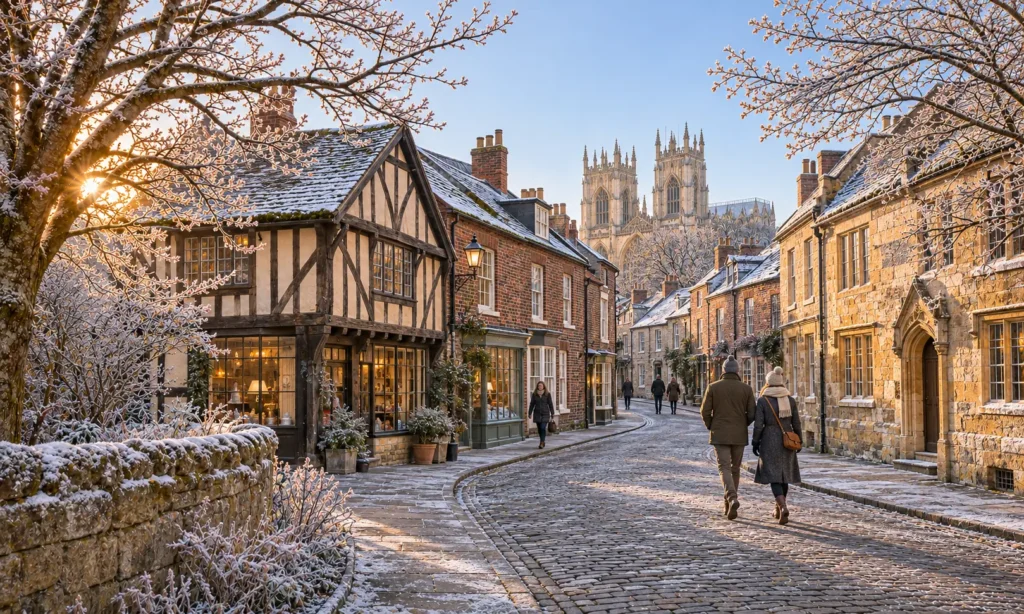
York’s walls, cobbled lanes and Minster make it one of England’s most atmospheric winter cities. Its centre is compact, so short days matter less, and you can see a lot on foot before dark.
Bath and the Cotswolds
Bath pairs well with the nearby Cotswolds. Spend one day in Bath for its thermal spa and Georgian architecture. Then take a slower day of village walks and pub lunches, ideally on a crisp, clear morning.
Bath also has a seasonal rink. Bath on Ice runs from 14 November 2026 to 4 January 2027.
Birmingham and the Midlands
Birmingham is one of the easiest winter bases in the UK. It has its own international airport and central rail links, and it sits within easy reach of the Cotswolds, Stratford-upon-Avon and Warwick.
The city’s biggest winter draw is its Christmas market. Birmingham’s Frankfurt Christmas Market runs from Thursday 5 November to Thursday 24 December 2026, across Victoria Square, New Street and High Street. An ice rink also runs at Centenary Square from 5 November 2026 to 3 January 2027.
Stratford-upon-Avon and Warwick make good half-day or full-day trips from the city, and both are among the Midlands towns we cover. They are compact and walkable, which suits short winter days.
Cardiff and South Wales
Wales’s capital has one of the UK’s most atmospheric light trails. Bute Park in Cardiff hosts an award-winning light and sound trail beside the castle, while the city also runs a Christmas market, an open-air ice rink and an Alpine-style village. The centre is compact enough to explore on foot in a single short winter day.
Belfast
Belfast makes a good festive base for Northern Ireland. Its winter calendar typically includes ice skating at City Hall, a Christmas boat parade on the River Lagan and fireworks at the Titanic Slipways. Event line-ups change from year to year, so look up Visit Belfast for this season’s dates.
The Lake District and Peak District
Both national parks feel very different in winter: quieter, moodier and ideal for short walks followed by a warm pub. Roads on higher ground can ice over, so keep plans flexible and look at road conditions before driving.
Things to Do in the UK in Winter
Good winter days usually mix one outdoor activity in daylight with something indoors once it gets dark.
Christmas Markets and Light Trails
Christmas markets run in many UK cities from November to around Christmas. Light trails in parks, gardens and zoos turn early darkness into an evening activity. Popular nights sell out, so book light trails ahead.
Winter Events 2026/27
| Event | Location | Dates |
|---|---|---|
| Frankfurt Christmas Market | Birmingham | 5 November to 24 December 2026 |
| World Darts Championship | Alexandra Palace, London | 11 December 2026 to 3 January 2027 |
| Edinburgh’s Hogmanay | Edinburgh | 31 December 2026 |
| Six Nations Rugby | Various venues | 5 February to 13 March 2027 |
| Yorkshire Dales Dark Skies Festival | Yorkshire Dales | 5 to 21 February 2027 |
These dates come from VisitBritain’s winter events listing, apart from the Birmingham market dates given above. Event dates can change, so confirm with organisers before you book travel around them.
Rainy-Day and Indoor Ideas
Wet days don’t have to wreck a trip. Good options include:
- Major museums and galleries, many of them free
- Theatre and pantomimes
- Spa days and afternoon tea
- Indoor climbing walls and indoor ski slopes
- Food and chocolate experiences
For something sweeter, try York’s Chocolate Story or Cadbury World in Bournville, Birmingham.
What’s Closed at Christmas 2026: Transport, Shops and Attractions
If you’re flying in or travelling between cities over Christmas, read this section carefully. Christmas Day 2026 falls on a Friday, and Boxing Day falls on the Saturday.
Christmas Eve (Thursday 24 December)
Expect early finishes. Many trains finish earlier than normal on Christmas Eve. Avoid planning a late-evening rail connection that day. trainsplit
Christmas Day (Friday 25 December)
The rail network shuts down completely. National Rail has confirmed there will be no National Rail services on Friday 25 December 2026. No TfL services run in London either, including buses, the Tube, the Elizabeth line, trams and river boats.
Airports keep working, however. Flights still land on Christmas Day, so you can arrive at an open terminal with no train to take you onward.
Boxing Day and the Bank Holiday
Boxing Day is almost as quiet. Most train operators won’t run at all. A handful are expected to run limited services on selected routes, including Chiltern Railways, Merseyrail, London Overground, ScotRail, Southern and Stansted Express.
Because Boxing Day falls on a Saturday, the bank holiday moves to the substitute day, Monday 28 December, when trains run on many routes. Some major closures continue that day, though, so look up your specific route.
Birmingham New Street Closure (24 to 28 December)
If you’re travelling through the Midlands, this is the key date to note. There will be no trains to or from Birmingham New Street from Thursday 24 to Monday 28 December 2026, and a full timetable resumes on Tuesday 29 December.
The closure lets Network Rail carry out a £13m renewal of overhead line equipment, much of which dates back to the 1960s. You can still walk through the station to Grand Central and the city centre, because only the trains stop. Avanti West Coast is running replacement buses to Wolverhampton and to Birmingham International, the station for the airport. nationalrailjustpark
Birmingham Snow Hill and Moor Street will be busier than normal during the closure. The Frankfurt Christmas Market’s final day, Christmas Eve, falls inside the New Street closure. If you plan to visit that day, arrange another way into the city.
Heathrow, Gatwick and London Rail Links
London’s airport rail links are also affected. Paddington services, including Great Western, Heathrow Express and the Elizabeth line, will not run from Christmas Day onwards because of engineering works in the Thames Valley. Works near Slough are scheduled between 27 December 2026 and 3 January 2027.
At Gatwick, no trains will run on Christmas Day, including Gatwick Express, Southern, Thameslink and GWR. Boxing Day brings no Gatwick Express or Thameslink services either. Timetables can still change, so look at National Rail or your train operator’s site shortly before you travel.
Shops and Attractions on Christmas Day
Christmas Day is the one day when almost everything stops. In England and Wales, large shops are not allowed to open on 25 December. Scotland has similar rules for Christmas Day and New Year’s Day. Most museums, galleries and visitor attractions close as well.
Many places reopen on Boxing Day, when the post-Christmas sales begin. Some attractions stay shut until 27 December, so confirm each venue’s festive opening hours rather than assuming normal times.
Eating Out on Christmas Day
Restaurants that open on Christmas Day usually serve a set lunch that you must book in advance, sometimes weeks ahead. Supermarkets are closed too. If you’re staying in a hostel, an apartment or other self-catering accommodation, buy food on Christmas Eve. Hotel restaurants are often the simplest option for the day itself.
New Year’s Eve and New Year’s Day
New Year’s Eve is a big night across the UK. London’s riverside fireworks are usually a ticket-only event, so look at the Mayor of London’s website well in advance rather than just turning up. In Scotland, Hogmanay celebrations often run over several days.
Many attractions close or open late on 1 January, and rail services are often reduced. Keep that day light.
Getting From the Airport in Winter
Picking a destination is the fun part. The journey from the terminal, in the dark and possibly in the rain, is often the hardest part of a December trip.
Landing Over Christmas
If your flight lands between Christmas Eve evening and Boxing Day, don’t assume a train will be waiting. Plan your onward journey before you fly, not in the arrivals hall.
For Midlands arrivals, it’s worth booking Birmingham Airport transfers ahead, as New Street will be closed to trains for five days. Agree your pickup before you travel, and confirm availability for your exact date when you book.
Flight Delays, Snow and Late Arrivals
Winter weather can delay flights and slow the roads. A late landing after dark, with luggage and limited public transport, is when travellers feel most stuck.
A pre-booked transfer reduces that risk. NET Airport Transfers tracks your flight rather than the scheduled time, so your pickup moves if you land early or late, and reasonable delays don’t cost extra. In snow or ice, allow extra time for any road journey and read the Met Office warnings before you set off.
Train vs Pre-Booked Transfer
| Situation | Train | Pre-booked transfer |
|---|---|---|
| Normal weekday | Often quick and good value | Door-to-door, good with luggage |
| Christmas Day | No National Rail services | Available only if your operator runs that day; confirm when booking |
| Heavy luggage or children | Changes and stairs can be hard work | Picked up at the terminal, with help loading luggage (name-board meet and greet at Birmingham Airport) |
| Late or delayed flight | Last trains may have gone | Pickup follows the tracked flight |
| Rural destination | Limited or no station nearby | Direct to the door |
Flying into London instead? NET runs door-to-door transfers between the Midlands and Heathrow, which is useful while Heathrow Express and the Elizabeth line are disrupted. You see a fixed price before you confirm, with no meter running.
UK Winter Itinerary Ideas
These outlines suit different trip lengths. Each one keeps outdoor sightseeing to daylight hours and puts indoor plans in the evening.
5 Days: Birmingham and the Heart of England
- Day 1: Arrive at Birmingham Airport. Visit the Frankfurt Christmas Market or the Centenary Square ice rink in the evening.
- Day 2: Birmingham museums and shopping, then dinner in the city.
- Day 3: Stratford-upon-Avon in the morning, Warwick in the afternoon.
- Day 4: A Cotswolds village day with a pub lunch.
- Day 5: Final morning in Birmingham, then fly home.
7 Days: London, Bath and the Cotswolds
- Days 1–3: London for museums, lights and a show.
- Day 4: Travel to Bath and visit the thermal spa.
- Day 5: Bath’s Georgian streets and markets.
- Day 6: The Cotswolds.
- Day 7: Return to London or travel straight to the airport.
10 Days: England and Scotland
- Days 1–3: London.
- Day 4: Travel north to York.
- Day 5: York.
- Days 6–8: Edinburgh, with a day trip to Glasgow, timed for Hogmanay if you want the big celebration.
- Days 9–10: A short Highlands trip or a quieter final stay. If you’re flying home from a different airport, plan that route carefully over the Christmas and New Year period.
Countryside legs are where public transport gets patchy, especially with luggage. For journeys such as an airport to a Cotswolds village, or one city to another on a holiday date, a long-distance taxi can cover the gap that trains and buses leave.
Planning Without a Car
City-to-city trips work well by train for most of the winter. The tricky dates are 24 to 28 December and the days around New Year, so avoid booking key rail connections then if you can. Rural stays are harder without a car, so base yourself in a town with good links and plan transfers in advance.
Getting Around: Trains, Coaches and Driving
Travelling around the UK in winter is straightforward between cities and slower in the countryside.
Trains and Coaches
Trains link most major cities well, and Advance fares usually cost less than buying on the day. Engineering works often happen on weekends and holiday dates, so look at your route again shortly before travelling, not just when you book.
Coaches are slower but often cheaper. They are a useful backup when rail routes are closed.
Winter Driving in the UK
If you hire a car, look at the Met Office warnings each morning before a long drive. Minor roads and hill routes ice over first, so build slack into your timings. Fill up before rural stretches, keep a warm layer in the car, and stop if you feel tired on dark evenings.
Remember that the UK drives on the left. Visitors unused to that may prefer not to drive in ice, rain or darkness.
What to Pack for the UK in Winter
You’ll swap cold streets for heated trains and shops all day, so pack things you can take off as easily as put on.
- A waterproof coat with a hood. Wind often makes umbrellas more trouble than they’re worth.
- Jumpers or fleeces you can peel off indoors
- Boots or shoes that keep water out and grip on wet or icy pavements
- Gloves, a hat and a scarf, which make evening market visits far more comfortable
- A Type G plug adapter (the UK runs on 230V)
- A power bank, as cold weather drains phone batteries faster
Travelling Solo in the UK in Winter
Winter suits solo travel well, especially in cities. London, Edinburgh and Glasgow attract visitors all year, and the festive season brings plenty of fellow travellers. Hostels and walking tours in December tend to be lively, while January is quieter and better value.
Making the Most of Dark Evenings
Early sunsets mean you’ll spend more time out after dark than you would in summer. City centres stay busy into the evening, especially around markets, restaurants and theatres. Stick to well-lit, busy streets, keep your phone charged, and save offline maps before heading out.
Arriving Late on Your Own
The most awkward moment for many solo travellers is landing after dark with luggage and no clear onward route. Plan that journey before you fly. With meet and greet at Birmingham Airport, your driver waits inside the arrivals hall with a name board, and the fixed price is agreed before you travel, so there’s no negotiating at a taxi rank late at night.
What Might Not Be Available
City attractions run much as normal in winter, apart from the Christmas closures. The bigger differences are in the countryside. Some Highland distillery tours, boat trips and rural attractions run reduced winter schedules or close until spring. If a particular tour matters to you, confirm its winter timetable before planning your trip around it.
Practical Tips Before You Travel
Sort out your entry rules first. Since 25 February 2026, visitors who don’t need a visa have had to hold a UK Electronic Travel Authorisation (ETA) before travelling, so apply on GOV.UK in good time. gov.uk
Next, book the dates that sell out early: hotels near Christmas markets, Edinburgh around Hogmanay, Christmas Day meals, and rail journeys in mid to late December. Seasonal opening hours change often, so a quick look at the venue’s website the day before saves a wasted journey.
Flying in or out via Gatwick, Manchester or another airport? See all UK airport transfers we cover.
Travelling as a family or a group with plenty of luggage? Browse our fleet, which includes the seven-seat V-Class, and child seats are available on request.
When you’re ready, get a fixed price online for your pickup or drop-off. You’ll see the price and agree the pickup time before you travel.